

Low Muscle Tone in Toddlers: What It Means and How Therapy Helps

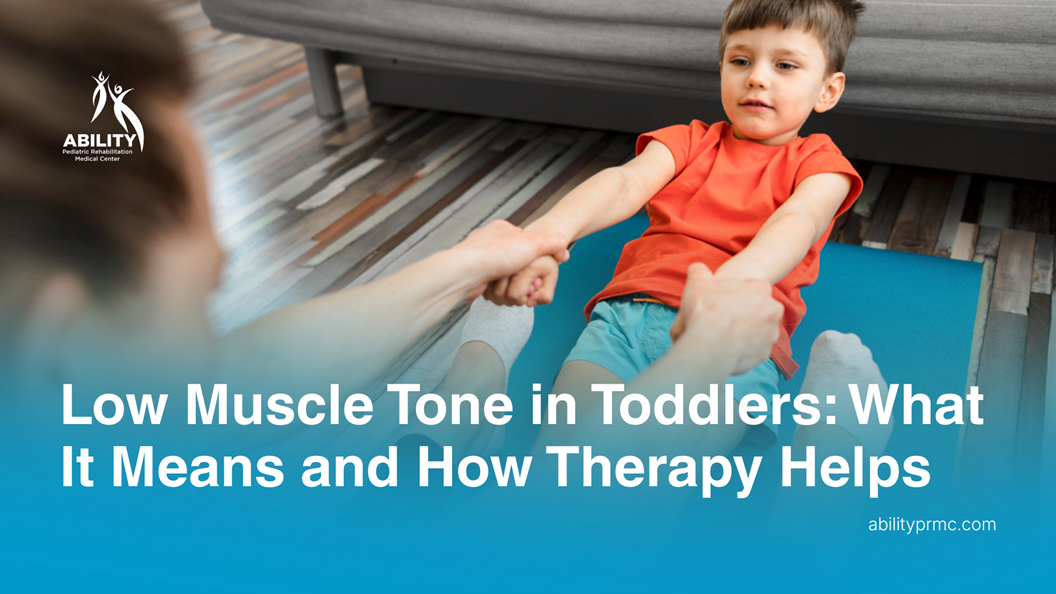
“He just feels floppy.” It’s a phrase many parents reach for instinctively, long before they know the medical term for what they’re noticing. Low muscle tone in toddlers, known medically as hypotonia, can be unsettling to notice and confusing to research — the search results range from reassuring to alarming. This guide explains what low muscle tone actually is, why it happens, and what the right kind of support looks like.
| Quick answer Low muscle tone (hypotonia) means a child’s muscles are softer and offer less resistance than expected, giving a floppy or ‘rag doll’ feel when held. It is not the same as muscle weakness, and it does not affect intelligence. It can be caused by a wide range of things — from a genetic or neurological condition, to prematurity, to no identifiable cause at all (called benign hypotonia). Because the causes vary so much, low muscle tone always warrants a proper medical evaluation. Physiotherapy and occupational therapy are the main treatments and can meaningfully improve strength, posture and motor skills. |
What low muscle tone actually means
Muscle tone is the small amount of tension a muscle holds even when it is completely relaxed — it is what keeps your body upright when you sit or stand, without you having to consciously tense anything. If your child has low muscle tone, their muscles feel unusually soft and offer less resistance when moved.
| The distinction that confuses most parents: tone is not strength. A child with low tone is not necessarily weak, in the same way a slack guitar string is not the same as a broken one. Tone is about the resting tension in the muscle; strength is about how hard it can contract. The two often occur together, but they are genuinely different things — which is part of why an assessment by a trained professional matters. |
Signs of low muscle tone by age
| Age | What you might notice |
| Infancy | A ‘floppy’ or ‘rag doll’ feel when held; poor head control; difficulty feeding due to weak facial or mouth muscles |
| Later infancy | Delayed rolling, sitting or crawling; difficulty pushing up on their arms during tummy time |
| Toddlerhood | Slouched, ‘W-sitting’ or floor-sitting posture; delayed or unsteady walking; tiring quickly during physical play |
| Preschool age | Appearing clumsy; avoiding physically demanding play; joint hyperflexibility (very ‘bendy’ joints); difficulty with stairs or climbing |
Some children with low tone also have wider hips when standing, a tendency to lean on furniture or people for support, or difficulty maintaining a seated posture at a table without slumping.
What causes low muscle tone?
This is the part that understandably worries parents most, because search results often list serious conditions first. It is worth knowing the full range.
- Benign (idiopathic) hypotonia. In many children, no underlying cause is ever found, and muscle tone gradually improves with time and appropriate therapy. This is a genuine and common category, not a consolation prize.
- Prematurity. Babies born early quite commonly have lower tone, which often improves over time.
- Genetic conditions. Down syndrome and Prader-Willi syndrome are among the more commonly associated conditions.
- Neurological or neuromuscular conditions. Cerebral palsy, spinal muscular atrophy and muscular dystrophies can all involve low tone.
- Developmental conditions. Low tone is also commonly seen in autistic children and is sometimes associated with sensory processing differences.
The wide range of possible causes is exactly why low muscle tone should never be assumed to be one thing or another without proper assessment — and exactly why it should always be evaluated rather than simply watched.
| Always see a doctor promptly: low muscle tone noticed in infancy — particularly with poor head control, feeding difficulties or very little movement — should be assessed by a paediatrician without delay, so that any underlying cause can be identified early. |
How low muscle tone is diagnosed
Diagnosis starts with a paediatrician, who will take a detailed history and carry out a physical and neurological examination — checking muscle tone, reflexes, joint flexibility and developmental progress, and distinguishing tone from strength. Depending on findings, further investigations or a referral to a specialist may follow to look for an underlying cause. This medical evaluation is a separate, necessary step alongside the therapy support described below — the two work together, not instead of each other.
How physiotherapy and occupational therapy help
Whatever the underlying cause, paediatric physiotherapy and occupational therapy are the primary hands-on supports for low muscle tone, and starting early gives a child’s development the best possible foundation. A therapist will typically work on:
- Core and postural strength, since a stable trunk underpins sitting, standing and coordinated movement of the arms and legs.
- Gross motor skills, building the strength and control behind rolling, sitting, crawling and walking, at whatever stage the child is currently at.
- Fine motor and hand skills, since low tone can affect grip and pencil control as much as gross movement.
- Balance and coordination, often through engaging, play-based activities rather than repetitive exercises.
- Functional daily tasks, such as sitting well at a table, managing stairs, or the endurance needed for a school day.
Therapy is almost always delivered as play for young children — bouncing on a trampoline before sitting at a table, or squeezing and rolling playdough before drawing, are both genuine, evidence-informed strategies used to build the exact muscles a child needs, in a way that feels like fun rather than a workout.
The outlook: what to expect going forward
This varies genuinely by cause, and an honest answer matters more than a falsely comforting one. Where low tone is benign or related to prematurity, many children show steady improvement with therapy and time, and some catch up to their peers. Where low tone is part of an ongoing condition, tone itself may not fully normalise, but strength, function and independence can still improve substantially with consistent therapy — the goal shifts from ‘fixing’ tone to helping a child do everything they want and need to do as capably as possible.
Either way, starting support early makes a real difference, which is why low tone identified in the first years of life is often folded into a broader early intervention plan alongside other services your child may need.
How we support families in Abu Dhabi
Ability Pediatric Rehabilitation Medical Center is a CARF-accredited, MOH-licensed child development centre in Abu Dhabi. Our paediatric physiotherapists and occupational therapists assess muscle tone, strength and motor development, and build individualised, play-based programmes — working alongside your child’s paediatrician and, where relevant, our wider early intervention team.
If you’ve noticed your child feels unusually floppy, tires quickly, or is behind on movement milestones, book a physiotherapy assessment — and do also mention it to your paediatrician, so any underlying cause can be properly evaluated alongside the therapy support.
Frequently asked questions
What does low muscle tone in a toddler feel like?
Often described as ‘floppy’ or a ‘rag doll’ feeling when held. Children may also show delayed motor milestones, poor posture, a tendency to slump or lean, and tire quickly during physical activity.
Is low muscle tone the same as muscle weakness?
No, though the two often occur together. Tone is the resting tension in a muscle; strength is how hard it can contract. A child can have low tone without being significantly weak, and assessment is needed to tell the two apart.
What causes low muscle tone in babies and toddlers?
Causes range widely — from no identifiable cause at all (benign hypotonia) and prematurity, to genetic conditions such as Down syndrome, and neurological or neuromuscular conditions such as cerebral palsy. It is also seen in some autistic children. This range is exactly why a medical evaluation matters.
Does low muscle tone go away?
It depends on the cause. Benign hypotonia and tone related to prematurity often improve significantly with time and therapy. Where low tone is part of an ongoing condition, tone may persist, but strength, function and independence can still improve substantially with consistent therapy.
Does low muscle tone affect intelligence?
No. Muscle tone relates to the body’s muscles, not cognitive ability, and hypotonia does not affect a child’s intelligence.
Which therapy helps low muscle tone?
Paediatric physiotherapy and occupational therapy are the main supports, focusing on core strength, gross and fine motor skills, balance and functional daily tasks. For young children, this is usually delivered through play rather than formal exercise.
When should I see a doctor about my child’s muscle tone?
As soon as you notice it, especially in infancy — particularly alongside poor head control, feeding difficulties, or very limited movement. A paediatrician can identify or rule out an underlying cause and guide next steps.
Sources
Write a Comment