

Fussy Eating or Feeding Difficulty? When to Seek Help

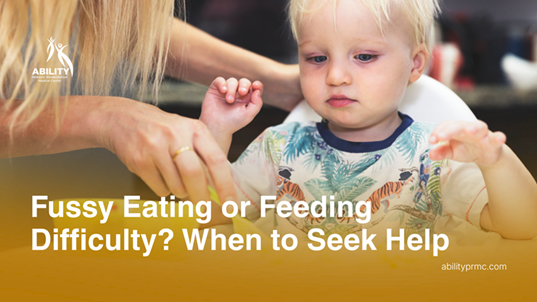
Almost every parent of a toddler has stood over a rejected plate, worn down by another mealtime standoff. Refusing vegetables, going off a food they loved last week, insisting on the same three meals — this is the daily reality of the toddler years, and usually it is completely normal. But sometimes feeding difficulties in children go beyond ordinary fussiness, and it helps to know where the line is — so you can relax about the normal, and get support for the rest.
| Quick answer Fussy eating is a normal, common part of toddler development — refusing new foods, strong preferences and variable appetite usually improve with time and gentle, no-pressure exposure. It becomes a feeding difficulty worth assessing when a child eats a very limited range of foods (often fewer than around 20), reacts to new foods with gagging, vomiting or distress, avoids whole food groups or textures, is losing weight or not growing well, or when mealtimes cause significant family stress. Feeding therapy, provided by occupational therapists and speech therapists, can help. If eating is affecting your child’s growth, see your paediatrician. |
What normal fussy eating looks like
Picky eating is not just common — it is developmentally expected, and often a sign of a child asserting healthy independence. Between roughly ages two and four, many children become noticeably choosier. Normal fussy eating tends to look like:
- Refusing new or unfamiliar foods (this is called neophobia and is very common).
- Going off foods they previously liked, then coming back to them.
- Strong preferences and a wish to control what and how they eat.
- Variable appetite from day to day, or meal to meal.
- Preferring familiar, plain or beige foods.
Crucially, the fussy eater still eats a reasonable overall range — usually some carbohydrate, some protein, some fruit or vegetable — and is growing and thriving. With patience and repeated, relaxed exposure, most children gradually widen their diets. It can take many exposures to a new food before a child accepts it, so persistence without pressure is the name of the game.
When it may be more than fussiness
Some children’s eating difficulties are not a phase and do not simply resolve with time. These are sometimes called feeding difficulties, problem feeding, or — at the more significant end — a paediatric feeding disorder. Warning signs that it may be more than typical fussiness include:
- Eating only a very small number of foods — often fewer than around 20 — with the list shrinking rather than growing over time.
- Dropping foods they used to eat, without adding new ones back.
- Strong physical reactions to non-preferred foods — gagging, retching, vomiting or real distress.
- Avoiding entire food groups or entire textures (for example, refusing anything that isn’t crunchy, or anything with lumps).
- Extreme rigidity — a food refused if the brand, colour, shape or plate changes.
- Difficulty with the mechanics of eating — chewing, moving food around the mouth, or swallowing — or frequent coughing or choking during meals.
- Mealtimes that are a source of significant, ongoing stress for the child or the family.
- Any concern about weight, growth or nutrition.
| See your paediatrician promptly if: your child is losing weight or not growing as expected, shows signs of a nutritional deficiency, or regularly coughs, gags or chokes while eating or drinking. These need medical review rather than watchful waiting. |
What can lie behind a feeding difficulty
Feeding is genuinely complex — it draws on the senses, the muscles of the mouth, coordination, and emotion all at once. When it goes wrong, there is usually a reason, which is why an assessment looks for the cause rather than just the behaviour. Common contributors include:
- Sensory sensitivities. A child who is over-sensitive to texture, smell or taste may experience certain foods as genuinely overwhelming. This often links to broader sensory differences.
- Oral-motor difficulties. Weakness or poor coordination of the mouth and tongue muscles can make chewing and managing certain textures genuinely hard.
- Medical factors. Reflux, constipation, allergies or a history of painful or frightening feeding experiences can all shape a child’s relationship with food.
- Developmental differences. Feeding difficulties are very common in autistic children and in children with developmental delays.
A word about ARFID
At the significant end of the spectrum is a condition called Avoidant/Restrictive Food Intake Disorder (ARFID) — a recognised eating disorder in which food avoidance is severe enough to affect nutrition, growth or daily life. Importantly, ARFID is not about body image or weight, which sets it apart from eating disorders like anorexia. It is not simply picky eating either; for a child with ARFID, an “unsafe” food can trigger genuine fear or a physical stress response.
Only a qualified professional can identify ARFID, and it is not something to diagnose from an article or manage alone. If your child’s eating is this restricted or distressing, the right step is a professional assessment — support exists, and it works best as a coordinated team effort.
Gentle strategies that help at home
Whether your child is a typical fussy eater or has a more significant difficulty, the same calm principles help — and the opposite (pressure) reliably backfires.
- Keep mealtimes low-pressure. Pressure, bribes and “just one bite” ultimatums tend to increase anxiety and refusal. Less pressure means more progress.
- Offer a ‘safe food’ at every meal. Include something you know your child will eat alongside anything new, so the meal never feels threatening.
- Focus on exposure, not eating. Touching, smelling, playing with or simply having a new food on the plate all count as progress. Eating comes later.
- Eat together and model. Children learn to eat by watching relaxed, unpressured adults and siblings enjoy food.
- Keep it calm and routine. Predictable mealtimes, minimal distractions, and no drama around refusal.
- Never force or punish. Forcing a bite can create fear that makes feeding harder and can turn a small difficulty into a bigger one.
| The mindset that helps most: your job is to offer good food, calmly and repeatedly; your child’s job is to decide whether and how much to eat. Letting go of the battle is often the thing that lets eating improve. |
How feeding therapy helps
Feeding therapy is provided by occupational therapy and speech and language therapy (feeding) professionals with specialist feeding training — occupational therapists often lead on sensory and self-feeding aspects, and speech therapists on oral-motor skills and safe swallowing. A feeding assessment looks at the sensory, motor and behavioural sides of eating together, then builds a gentle, play-based, no-pressure plan. Therapists use graded exposure — helping a child interact with a food in ways that feel manageable, building up slowly — and never force large amounts. Family involvement is central, because progress has to carry over to your own table.
Where feeding difficulty is part of a broader developmental picture, early intervention and the wider team support alongside, and more significant conditions such as ARFID are managed by a coordinated team that may also include a paediatrician and dietitian.
How we support families in Abu Dhabi
Ability Pediatric Rehabilitation Medical Center is a CARF-accredited, MOH-licensed child development centre in Abu Dhabi. Our occupational therapists and speech and language therapists assess and support feeding and mealtime difficulties — sensory food aversion, oral-motor challenges and restrictive eating — with gentle, evidence-based methods and parent coaching, in Arabic and English.
If mealtimes have become a daily battle, your child’s diet is shrinking, or you are worried about their eating, you do not have to keep struggling alone. Book a feeding assessment — and if there is any concern about your child’s growth or weight, please see your paediatrician as well.
Frequently asked questions
Is fussy eating normal in toddlers?
Yes. Picky eating is a normal, expected part of development, especially between ages two and four. Refusing new foods, strong preferences and variable appetite usually improve with time and gentle, repeated, no-pressure exposure, as long as the child still eats a reasonable overall range and is growing well.
When should I worry about my child’s eating?
Consider an assessment if your child eats a very limited range (often fewer than around 20 foods), reacts to foods with gagging or distress, avoids whole textures or food groups, is losing foods over time, or if mealtimes cause major stress. See your paediatrician promptly if growth, weight or swallowing is a concern.
What is the difference between picky eating and ARFID?
Picky eating tends to improve with time and gentle encouragement and does not harm nutrition or growth. ARFID is a recognised eating disorder — not about body image — where food avoidance is severe enough to affect nutrition, growth or daily life, often with real fear around ‘unsafe’ foods. Only a professional can identify ARFID.
Which therapy helps with feeding difficulties?
Feeding therapy, provided by occupational therapists and speech-language therapists with feeding training. Occupational therapists often address sensory and self-feeding aspects; speech therapists address oral-motor skills and safe swallowing. More significant cases are managed by a coordinated team.
How can I get my fussy eater to try new foods?
Keep mealtimes low-pressure, always include a ‘safe food’, and focus on exposure rather than eating — touching, smelling or playing with a food all count. Eat together and model relaxed eating, and never force or punish. It can take many calm exposures before a child accepts a new food.
Can feeding problems be linked to autism or sensory issues?
Yes. Feeding difficulties are very common in autistic children and in children with sensory processing differences, often because certain textures, smells or tastes feel overwhelming. An assessment can identify whether sensory or developmental factors are involved.
Should I make my child finish their plate?
No. Forcing food or insisting on a clean plate tends to increase anxiety and refusal and can make feeding harder. A helpful approach is that you decide what to offer and when; your child decides whether and how much to eat.
Sources
Write a Comment