

Occupational Therapy for Children: What It Is and When Your Child Might Need It

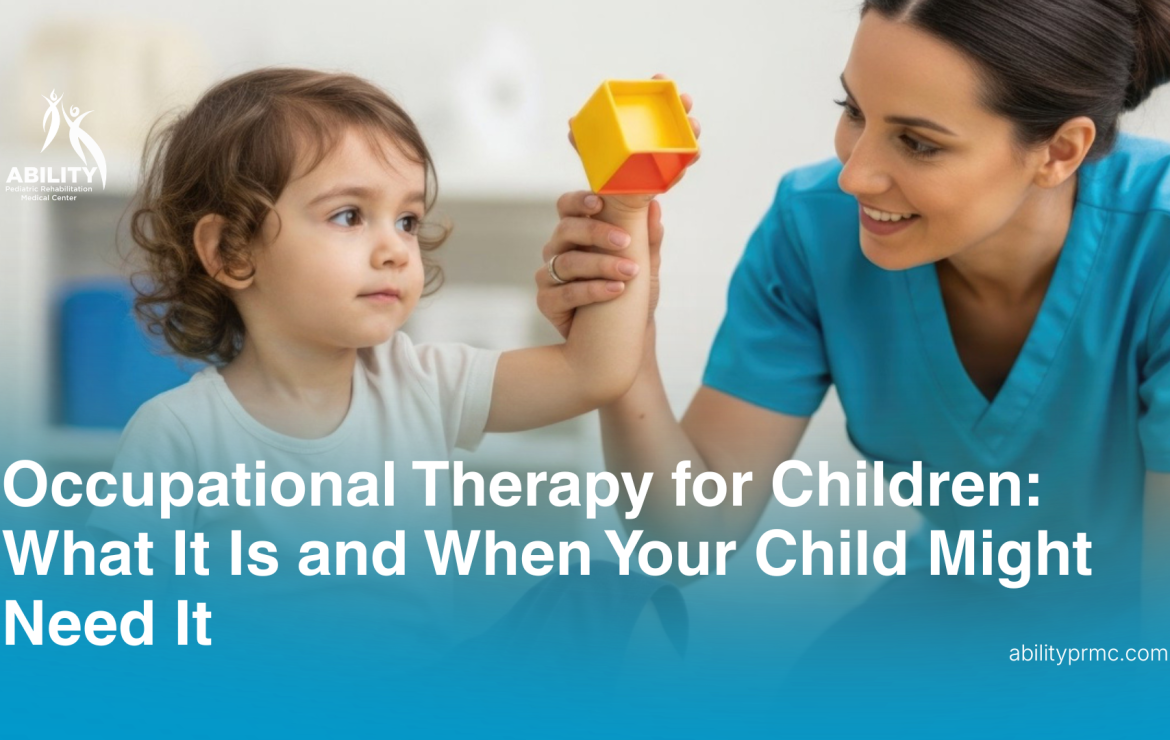
When parents first hear that their child might benefit from occupational therapy, the reaction is often confusion. Occupational therapy sounds like something for adults who need to get back to work. In fact, occupational therapy for children is about helping them do the jobs of childhood: playing, learning, dressing, eating, writing and getting along with others. This guide explains what paediatric OT covers, the signs a child may need it, and what to expect.
| Quick answer Paediatric occupational therapy helps children build the skills they need for everyday life, including fine motor skills, handwriting, self-care such as dressing and feeding, sensory processing, attention, planning and play. A child may benefit from OT if they struggle with tasks like holding a pencil, using cutlery, buttoning clothes, coping with noise, textures or movement, or joining in play at their age level. Sessions are play-based and goal-driven, and parents play an active role. A paediatrician, teacher or therapist can recommend an assessment, and parents can also seek one directly. |
What is paediatric occupational therapy?
For a child, an ‘occupation’ is anything that fills their day and matters to them: playing, learning, eating, dressing, washing, making friends, going to school. An occupational therapist looks at what gets in the way of a child doing these things, and works to remove the barrier, either by building the child’s skills or by changing the task or environment.
This is why OT looks different from what many people expect. A session may look like play, with building blocks, swings, playdough, painting or obstacle courses. Each activity is chosen to work on a specific skill, such as hand strength, balance, planning a sequence of movements or staying calm when something feels overwhelming.
What areas does children’s OT cover?
- Fine motor skills. Using the small muscles of the hands for grasping, cutting, threading, drawing and writing. See our guide to fine motor skills activities.
- Handwriting and school skills. Pencil grip, letter formation, spacing, speed and stamina. See handwriting problems in children.
- Self-care. Dressing, fastening buttons and zips, tying laces, using cutlery, brushing teeth, toileting and managing a school bag.
- Sensory processing. How a child takes in and responds to sound, touch, movement, light and taste. Some children are overwhelmed by sensory input, and others seek lots of it. See signs of sensory processing difficulty.
- Gross motor and coordination. Balance, posture and movement planning, often alongside physiotherapy. See dyspraxia in children.
- Attention, organisation and emotional regulation. Staying focused, planning and sequencing tasks, and managing frustration and transitions.
- Play and social participation. Joining in games, taking turns and taking part in classroom and playground activities.
- Feeding and mealtime skills, including difficulty with textures, chewing or self-feeding, often in partnership with speech and language therapy.
Signs your child might benefit from OT
| Area | Signs worth noticing |
| Hands and handwriting | Awkward pencil grip, tires quickly when writing, messy work, avoids drawing or colouring, struggles with scissors |
| Self-care | Needs a lot of help with dressing, fastenings or cutlery well beyond the age peers manage them |
| Sensory | Distressed by loud noises, clothing tags or messy play; very picky with textures; constantly moving, crashing or touching everything; unusually clumsy or unaware of body position |
| Coordination | Frequent trips and falls, difficulty with ball skills, avoids playground equipment, slow at PE or sports |
| Attention and behaviour | Difficulty starting or finishing tasks, melts down at transitions, hard to settle, disorganised |
| Play and social | Prefers to play alone because group games feel too hard, limited pretend play, struggles to share space with others |
Most children show a few of these on occasion. The pattern to notice is persistence, together with an effect on daily life, school or confidence. If several signs show up repeatedly, an assessment is worth considering.
Conditions where OT often helps
OT is based on your child’s needs rather than a diagnosis, but it is commonly part of care for children with autism, ADHD, developmental delay, developmental coordination disorder (dyspraxia), cerebral palsy, Down syndrome, sensory processing differences, learning difficulties and some medical conditions. It also helps children with no formal diagnosis who are simply finding certain everyday tasks harder than their peers do.
What happens in an OT assessment and sessions
- Conversation with you. The therapist asks about your child’s development, strengths, interests and the daily activities that cause difficulty. You know what matters most, so your priorities shape the goals.
- Observation and play. The therapist watches how your child plays, moves, handles materials and responds to different sensations. Standardised tests may be used for fine motor, visual-motor or sensory skills.
- Information from school or nursery. Teachers can describe how your child manages in the classroom.
- Goals and plan. The therapist explains what they found, sets a few clear, practical goals and recommends how often to meet.
- Therapy sessions. Sessions are play-based, structured around the goals, and usually include something to practise at home.
- Review. Progress is checked regularly, and goals are updated as your child grows.
Our article on what to expect at a first therapy session covers the practical side in more detail.
The parent’s role: how to support OT at home
Therapy works best when it carries into everyday life. A weekly session is useful, but the repeated practice in between is what builds skill.
- Ask the therapist for a short, specific home plan, and fit it into routines like bath time or mealtimes.
- Let your child do things themselves, even when it is slow and messy. Rushing in to help can stop skills developing.
- Break tasks into steps and teach one at a time.
- Offer play that builds the same skills: playdough, threading, building, climbing, messy play, simple cooking.
- Celebrate effort and small gains, and avoid comparing with other children.
- Share what you learn with your child’s teacher so strategies are used at school too. Our parent training sessions help families do this.
How OT differs from physiotherapy and speech therapy
The therapies overlap, and children often see more than one. A simple way to see the difference: physiotherapy focuses on gross movement, strength, balance and mobility; speech and language therapy focuses on communication, language and swallowing; occupational therapy focuses on the practical skills of daily life, hand function and sensory regulation. A good team shares goals so that therapies support each other.
When to seek an assessment
- Your child’s everyday skills are clearly behind those of peers, and not catching up.
- A teacher or nursery has raised concerns about handwriting, behaviour, attention or sensory responses.
- Everyday tasks cause regular distress for your child or your family.
- Your child has a diagnosis such as autism, ADHD or developmental delay, and you want practical help with daily skills.
You do not need a formal diagnosis, and it is fine to ask for an assessment on the basis of a concern alone.
How we support families in Abu Dhabi
Ability Pediatric Rehabilitation Medical Center is a CARF-accredited, MOH and DoH licensed child development centre in Abu Dhabi. Our occupational therapy team works alongside physiotherapy, speech and language therapy and parent training, so your child’s goals are coordinated across therapies.
If you are wondering whether OT could help your child, book a consultation. We will look at how your child manages day to day, explain what we see and suggest next steps.
Frequently asked questions
What does an occupational therapist do for a child?
They help children build the skills needed for everyday life, such as using their hands, handwriting, dressing, feeding, sensory regulation, attention and play, using play-based activities and home strategies.
At what age can a child start occupational therapy?
OT can help from infancy, for example with feeding or early motor development, through to the teenage years. The right time is when a need is noticed, not a particular age.
Does my child need a diagnosis to see an occupational therapist?
No. OT is based on your child’s functional needs. Many children start with no diagnosis, and some are referred by paediatricians, teachers or parents.
What is the difference between OT and physiotherapy for children?
Physiotherapy mainly addresses gross movement, strength, balance and mobility, while OT focuses on practical daily skills, hand function and sensory regulation. Many children benefit from both.
How long does a child need occupational therapy?
It varies with the child’s needs and goals. Some children need a short block of sessions for a specific skill, while others benefit from longer-term support. Progress is reviewed regularly.
How can I tell if my child’s clumsiness needs OT?
Occasional clumsiness is normal. If it is persistent, behind peers and affects dressing, writing, play or confidence, an assessment can tell you whether therapy would help.
What is sensory integration therapy?
It is an OT approach that uses structured, play-based sensory experiences to help children respond more comfortably to sensory input. It is one part of OT, used when sensory differences affect daily life.
Sources
Related posts
Write a Comment
Popular Posts
Speech Sound Development: When Should My Child Say Each Sound?