


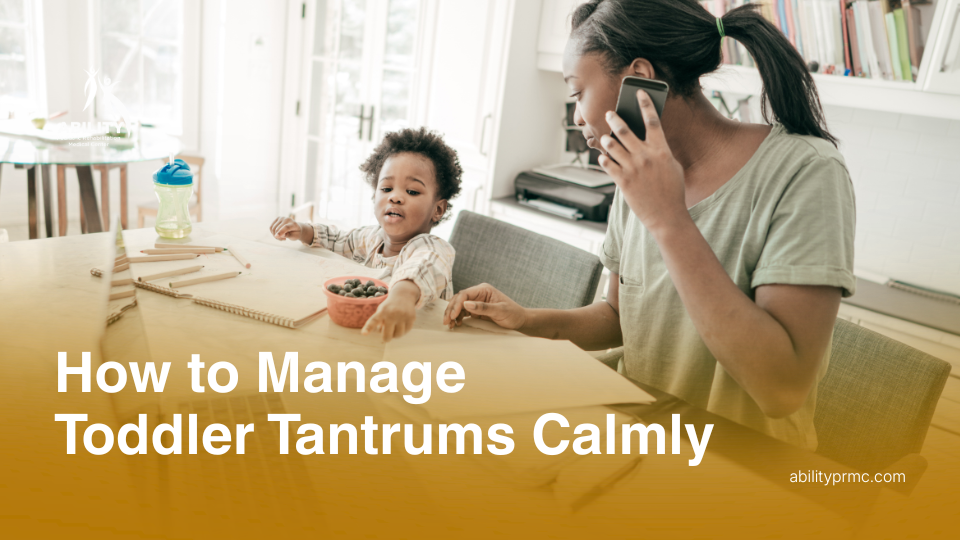
Few things test a parent like a full-blown toddler tantrum — especially in a busy mall with an audience. The screaming, the flailing, the total collapse over something as small as the wrong colour cup can leave even the calmest parent frazzled and second-guessing themselves. The reassuring truth is that tantrums are a normal, healthy part of development, and there are calm, effective ways to handle them. Here is how to manage tantrums in toddlers — in the moment, and by heading them off before they start.
| Quick answer Tantrums happen because a toddler’s emotions have outgrown their ability to manage or express them — the thinking, regulating part of the brain is still developing. To manage one calmly: stay calm yourself, keep your child safe, acknowledge the feeling without giving in to an unreasonable demand, and wait it out with quiet presence rather than reasoning or punishment. Most tantrums fade as language and self-regulation mature. Frequent, extreme or unusually prolonged tantrums — especially past age four or five — can occasionally signal an underlying need worth checking. |
Why toddlers have tantrums
Understanding the cause changes everything about how you respond. A tantrum is not manipulation or bad behaviour — it is a small person overwhelmed.
Toddlers experience huge emotions, but the part of the brain that regulates those emotions and puts them into words is still years from maturity. They feel frustration, disappointment or exhaustion with full intensity, and they simply do not yet have the tools to manage it. The tantrum is what an overwhelmed nervous system looks like when the brakes have not been installed yet.
Common triggers include:
- Frustration at not being able to do or say what they want.
- Tiredness, hunger or over-stimulation — by far the most common hidden drivers.
- A need for independence and control colliding with a “no”.
- Difficulty with transitions — stopping a fun activity, leaving the park.
- Big feelings they cannot yet name, such as jealousy or disappointment.
In the moment: how to stay calm and help
When a tantrum is in full flow, the goal is not to end it instantly — it is to keep everyone safe and let the storm pass without making it worse.
- Regulate yourself first. Your calm is contagious, and so is your stress. Take a breath. A child in meltdown cannot borrow calm you do not have.
- Keep them safe. If they are hitting, throwing or could hurt themselves, calmly move them somewhere safe. Safety comes before everything else.
- Acknowledge the feeling. Name it simply: “You’re really cross that we have to leave. That’s hard.” Feeling understood often takes the heat out of a tantrum faster than anything else.
- Don’t reason or lecture. A mid-tantrum brain cannot process logic or negotiation. Save the conversation for afterwards. Fewer words are better.
- Hold the boundary, kindly. Acknowledging the feeling is not the same as giving in. If the answer was no, it stays no — said gently. Giving in to stop a tantrum teaches that tantrums work.
- Offer calm presence. Some children want a cuddle; others need space and just to know you are near. Follow your child’s lead and wait it out.
- Reconnect afterwards. Once calm returns, a brief, warm reconnection — and, for older toddlers, a few simple words about what happened — rebuilds security and slowly builds emotional skills.
| What to avoid: matching their volume, punishing the feeling itself, long explanations mid-tantrum, or giving in once you’ve said no. None of these help, and most quietly make future tantrums more likely. |
Preventing tantrums before they start
You will never prevent every tantrum — nor should you want to, since learning to weather big feelings is part of growing up. But you can reduce their frequency substantially by removing the common triggers.
- Protect sleep and snacks. A huge proportion of tantrums are really tiredness or hunger in disguise. A well-rested, well-fed toddler tantrums far less.
- Warn about transitions. “Two more minutes, then we tidy up.” A gentle countdown gives a toddler time to adjust rather than being yanked out of an activity.
- Offer controlled choices. “The red cup or the blue cup?” Small choices satisfy the drive for independence without opening up a battle.
- Keep routines predictable. Toddlers feel safest when the day is predictable. Consistency reduces the anxiety that fuels outbursts.
- Pick your battles. Save your firm “no” for things that truly matter — safety, kindness — and let the small stuff go.
- Name feelings all day, not just in crises. The more a child hears words for emotions when calm, the sooner they can use words instead of meltdowns.
Tantrum or meltdown? An important distinction
These two words are often used interchangeably, but for some children the difference matters a great deal.
| Typical tantrum | Meltdown |
| Usually has a goal — wanting something or avoiding something | Not goal-driven — an involuntary response to being overwhelmed |
| The child has some awareness of an audience | Little awareness of surroundings; the child is not ‘performing’ |
| Often eases once the need is met or the feeling is acknowledged | Does not ease by giving in — the child needs time and reduced input to recover |
| Fades as language and self-regulation develop | May persist, and can be triggered by sensory overload rather than frustration |
A meltdown is often a nervous system that has run out of capacity — frequently driven by sensory difficulties such as an overwhelming, noisy, bright environment. If your child’s “tantrums” are frequently of this kind — triggered by environments rather than wants, and not eased by having a need met — it is worth understanding why, because the strategies that help are different.
When tantrums may be worth a closer look
Tantrums are normal, and the vast majority need nothing but patience and time. Occasionally, though, they can be a sign of an underlying need. Consider seeking advice if your child’s tantrums:
- Are extremely frequent, intense or unusually long (routinely well beyond 15 minutes).
- Continue to be severe and frequent past the age of four or five, when self-regulation usually improves.
- Regularly involve hurting themselves or others, or destroying things.
- Seem triggered by sensory input — noise, textures, crowds — rather than by wanting or avoiding something.
- Come alongside other concerns, such as delayed speech or several of the early signs of autism.
- Are affecting your family’s daily life, or leaving you feeling you have run out of tools.
Seeking advice in these situations is not an admission of failure — it is good parenting. Sometimes there is an underlying need; sometimes you simply need a few new strategies and some reassurance.
How we support families in Abu Dhabi
Ability Pediatric Rehabilitation Medical Center is a CARF-accredited, MOH-licensed child development centre in Abu Dhabi. Our parent training equips families with practical, evidence-based strategies for managing behaviour and building a child’s emotional regulation — and where there is an underlying need, our psychological support and occupational therapy teams can help. You do not have to work it out alone.
If tantrums or meltdowns are wearing your family down, or you sense there may be more going on, book a consultation and we will help you find calmer ground.
Frequently asked questions
Why does my toddler have so many tantrums?
Because their emotions have outgrown their ability to manage and express them. The regulating, verbal parts of the brain are still developing, so big feelings spill over. Tiredness, hunger and over-stimulation are the most common hidden triggers.
What is the best way to respond to a tantrum?
Stay calm, keep your child safe, acknowledge the feeling in a few simple words, avoid reasoning or lecturing mid-tantrum, hold your boundary kindly rather than giving in, and offer calm presence while it passes. Reconnect warmly once they are calm.
Should I ignore my child’s tantrums?
Not exactly. Ignore an unreasonable demand rather than reward it, but do not ignore the child. Staying calmly present and acknowledging the feeling helps them recover and slowly builds emotional skills. Cold withdrawal is not the goal.
At what age do tantrums usually stop?
Tantrums are most common between about one and four years and usually ease as language and self-regulation mature. Frequent, severe tantrums continuing past four or five are worth discussing with a professional.
What’s the difference between a tantrum and a meltdown?
A tantrum usually has a goal and eases once the need is met or acknowledged. A meltdown is an involuntary response to being overwhelmed — often by sensory input — and does not ease by giving in; the child needs time and reduced stimulation to recover.
When should I be concerned about my child’s tantrums?
If they are extremely frequent, intense or prolonged, continue severely past age four or five, regularly involve hurting themselves or others, seem triggered by sensory input, or occur alongside other concerns such as delayed speech, it is worth seeking advice.
Does giving in to a tantrum make them worse?
Generally yes. Giving in to an unreasonable demand to stop a tantrum teaches a child that tantrums are an effective way to get what they want, which tends to increase them. Acknowledge the feeling warmly, but hold the boundary.
Sources
Write a Comment