
Physiotherapy for Children: Conditions Treated, Signs to Watch and What to Expect

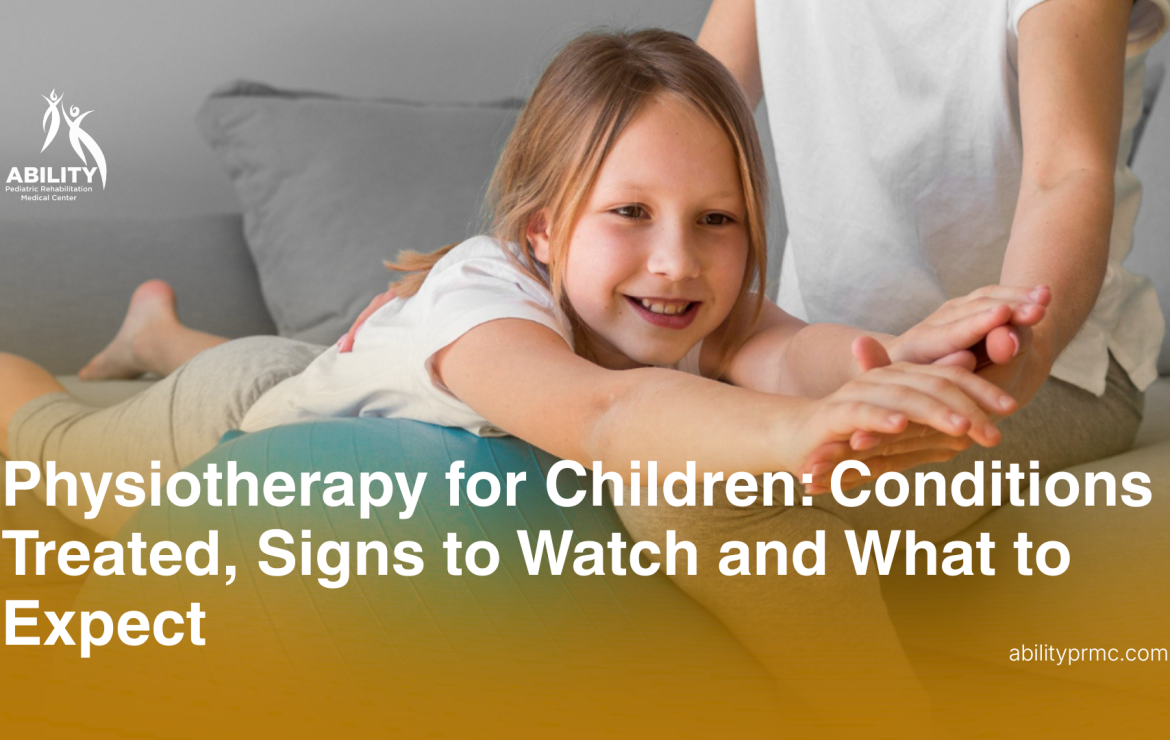
When people hear ‘physiotherapy’, they often picture sports injuries or recovery after surgery. Physiotherapy for children is different. A paediatric physiotherapist works with babies, toddlers, children and teenagers whose movement, strength, balance or posture is not developing as expected, using play to help them move with more confidence and independence.
| Quick answer Paediatric physiotherapy helps children develop and improve movement, strength, balance, coordination and posture. Physiotherapists commonly work with children who are late to sit, crawl or walk, have low or high muscle tone, toe walk, walk in unusual ways, have cerebral palsy, Down syndrome or genetic conditions, are recovering from injury or surgery, or struggle with coordination. Sessions are play-based and goal-focused, and parents learn exercises to continue at home. Signs worth checking include missed motor milestones, asymmetry between the two sides, frequent falls and regression in movement skills. |
What does a paediatric physiotherapist do?
A paediatric physiotherapist assesses how a child moves and how their body is developing, and then helps to improve it. They look at gross motor skills such as rolling, sitting, crawling, standing, walking, running and jumping, and at the strength, balance, joint range and muscle tone that support those skills.
With children, therapy rarely looks like adult exercise. It is built around play: climbing, kicking, reaching for toys, crawling through tunnels, balancing on cushions or practising stairs. The therapist turns each activity into practice for a specific movement goal, and keeps it engaging so the child wants to take part.
Conditions and concerns physiotherapy can help with
- Delayed motor milestones, such as late sitting, crawling or walking. See developmental milestones by age.
- Low muscle tone (hypotonia), where a child feels floppy or tires easily. See low muscle tone in toddlers.
- Cerebral palsy and other conditions affecting muscle tone and control. See cerebral palsy in children.
- Toe walking that persists beyond the early walking years. See toe walking in children.
- Developmental coordination disorder (dyspraxia), which affects balance, ball skills and movement planning. See dyspraxia in children.
- Genetic and chromosomal conditions, including Down syndrome, where motor development is often slower.
- Head shape and neck problems in babies, such as a preference for turning to one side (torticollis).
- Foot and leg alignment concerns, such as in-toeing, flat feet or an unusual walking pattern, where an assessment can clarify what is normal for age and what needs follow-up.
- Injury or surgery recovery, including fractures and orthopaedic procedures.
- Neuromuscular and other medical conditions that affect strength and mobility.
- Prematurity, where babies born early may need support to catch up with motor skills.
Signs your child may need physiotherapy
| Age | Signs worth discussing with a doctor or physiotherapist |
| Babies (0 to 12 months) | Very stiff or floppy; not lifting head by about 3 to 4 months; not rolling by around 6 months; not sitting by about 9 months; strong preference for one side; uses one hand much more than the other |
| Toddlers (1 to 3 years) | Not walking by around 18 months; persistent toe walking; frequent falls; W-sitting all the time and avoids other positions; difficulty with stairs or getting up from the floor |
| Preschool (3 to 5 years) | Cannot jump, hop or kick a ball when peers can; tires quickly; awkward gait; avoids active play |
| School age | Poor coordination or balance; complains of leg pain or fatigue with activity; difficulty keeping up in PE; unusual posture or walking pattern |
| See a doctor promptly if: Your child loses a movement skill they previously had. There is a sudden limp, refusal to bear weight, or severe pain. One side of the body is clearly weaker than the other. Your baby seems unusually stiff, floppy or has trouble feeding. |
What happens at a physiotherapy assessment
- History. The therapist asks about pregnancy, birth, milestones, health and your concerns.
- Observation. They watch your child move and play, looking at posture, balance, symmetry, strength and how they get from one position to another.
- Hands-on assessment. Gentle checks of muscle tone, joint range, reflexes and strength, with standardised tools where appropriate.
- Goals. Together you agree on practical goals, such as walking without support, climbing stairs or joining in at the playground.
- Plan. The therapist explains what they found, how often to attend and what to practise at home.
What physiotherapy sessions involve
- Play-based movement practice, repeated in different ways so skills become automatic.
- Strengthening and balance activities matched to your child’s level.
- Stretching and positioning to maintain muscle length and joint movement.
- Equipment advice, for example supportive footwear, orthoses, walkers or standing frames where needed.
- Parent coaching. You learn the same exercises so that practice continues daily. Short, regular practice matters more than long, occasional sessions.
- Joint work with other therapists. Many children also benefit from occupational therapy for hand skills and daily tasks.
How to support your child’s movement at home
- Give floor time. Babies need time on their tummy and on the floor, awake and supervised, to build strength.
- Limit time in containers such as car seats, bouncers and walkers when they are not needed.
- Encourage active play every day: climbing, running, jumping, swimming, cycling and outdoor games.
- Place toys to encourage movement, slightly out of reach, so your child needs to reach, roll or crawl.
- Let your child try. Allow them to attempt steps, climbing and tricky movements while you stay close to keep them safe.
- Follow the home programme your physiotherapist gives you, even if it is only five minutes a day.
Common myths about children’s movement
- “They will grow out of it.” Many children do catch up, but it is hard to know in advance which ones. Early assessment is the safe route, because therapy does no harm to a child who would have caught up anyway.
- “Walkers help babies learn to walk.” They do not, and they can delay walking and create safety risks. Floor time and supported standing are better.
- “Late walking always means a problem.” Healthy children begin walking across a wide range of ages. What matters is the overall pattern, including strength, balance and other skills, and whether progress continues.
- “Physiotherapy is only for injuries.” Paediatric physiotherapy is mostly about development, helping a child’s body learn movements it has not yet mastered.
- “Therapy should be hard work for the child.” Effective paediatric therapy is playful. A child who is having fun will practise far more than a child who is being drilled.
When to seek help
If you are unsure whether your child’s movement is on track, an assessment is a straightforward way to find out. Many concerns turn out to be within the normal range, and you will leave with reassurance. When there is a genuine difficulty, starting early gives your child more time and more flexibility to build skills.
How we support families in Abu Dhabi
Ability Pediatric Rehabilitation Medical Center is a CARF-accredited, MOH and DoH licensed child development centre in Abu Dhabi. Our paediatric physiotherapy team works alongside occupational therapy and parent training, so movement goals fit into your child’s daily life.
If you are concerned about your child’s movement, book a consultation. We will assess how your child moves, explain what we find and agree a plan with you.
Frequently asked questions
What does a paediatric physiotherapist treat?
They treat movement, strength, balance and posture difficulties in babies and children, including delayed milestones, low or high muscle tone, toe walking, coordination difficulties, cerebral palsy, genetic conditions and recovery from injury or surgery.
When should I take my baby to a physiotherapist?
Consider an assessment if your baby is unusually stiff or floppy, is slow to hold up their head, roll or sit, favours one side, or you are simply worried about their movement. You do not need to wait for a set age.
Is toe walking something physiotherapy can help with?
Persistent toe walking beyond the early walking years can be assessed by a physiotherapist, who will look for causes such as tight calf muscles, and advise on stretches, strengthening or further medical review.
Does my child need a referral for physiotherapy?
This depends on the clinic and your insurance. Some accept direct bookings, while others or insurers require a doctor’s referral. Check before booking.
How long does a child need physiotherapy?
It varies. Some children need a short block of sessions for a specific goal, while others benefit from longer-term support as they grow. Progress is reviewed regularly.
Is W-sitting a problem?
Occasional W-sitting is common. If it is the only way your child sits, or your child has tightness, low tone or coordination difficulties, a physiotherapist can advise on varying positions.
Can physiotherapy help flat feet in children?
Flat feet are common in young children and often normal. A physiotherapist can assess whether yours is flexible and typical for age, or whether strengthening, footwear advice or medical follow-up would help.
Sources
Related posts
Write a Comment
Popular Posts
Speech Sound Development: When Should My Child Say Each Sound?