Speech Delay in Toddlers: When Should You Be Concerned?

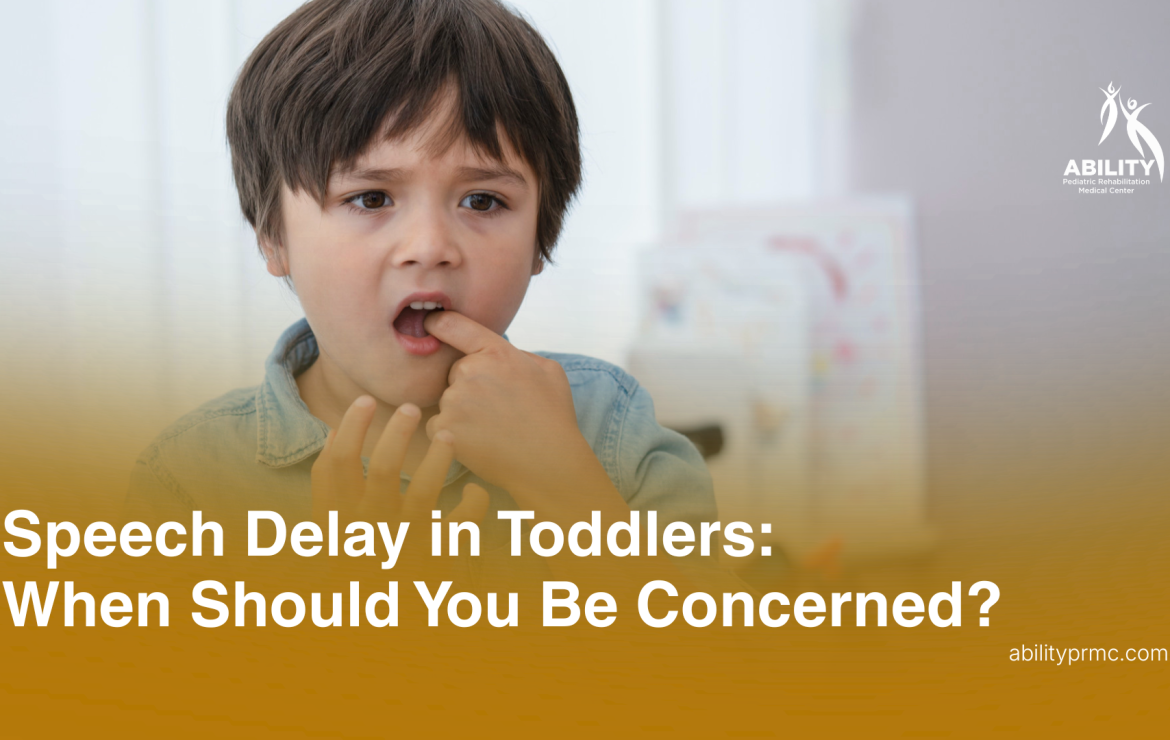
“Shouldn’t she be talking by now?” It is one of the most common questions parents ask — and one of the most anxious. Some toddlers chatter early; others stay quiet and then suddenly burst into full sentences. That variation is completely normal. But there is a point at which waiting stops being helpful, and knowing where that line sits is what this guide is about. Understanding speech delay in toddlers — what is typical, what is not, and when to act — helps you make a confident decision rather than a worried guess.
| Quick answer A toddler’s speech should be assessed if they are not babbling by 12 months, not using single words by 16 months, not combining two words by 24 months, or if they lose words or skills they previously had at any age. A single missed milestone is not necessarily a problem, but these specific red flags — or a pattern of delays — are worth having checked by a speech and language therapist. |
Speech milestones by age
The table below gives a general guide to what most children are doing at each stage. Use it to notice patterns, not to self-diagnose.
| Age | What most children are doing |
| 6–12 months | Babbling with consonant–vowel strings (“bababa”), turning towards sounds, responding to their name |
| 12 months | A first word or two (“mama”, “dada”, “uh-oh”); using gestures such as pointing and waving |
| 15–18 months | A growing vocabulary of single words; understanding far more than they can say; following simple instructions |
| 24 months | Combining two words into short phrases (“more juice”, “want teddy”); a rapidly expanding vocabulary |
| 2–3 years | Short sentences; speech becoming clearer and understandable to familiar adults most of the time |
An important note on milestone charts
You may find different numbers in different places, and this confuses a lot of parents. In 2022 the CDC revised its milestone checklists to reflect what 75% or more of children do by a given age — which pushed some language milestones later. Many speech-language pathologists, and the American Speech-Language-Hearing Association, work to earlier and more cautious thresholds.
What this means for you in practice: milestone charts are a guide for noticing, not a licence to wait. If your instinct says something is different, an assessment is always reasonable — and there is no downside to being reassured.
Red flags that warrant an assessment
These are the signs that most consistently prompt speech-language professionals to recommend an evaluation:
- No babbling by 12 months.
- No gestures — no pointing, waving or showing — by 12 months.
- Not responding to their own name.
- No single words by 16 months.
- No meaningful two-word phrases by 24 months (repeating or imitating does not count).
- Speech that is very unclear — unfamiliar adults understand very little by around age 3.
- Difficulty understanding simple instructions (a receptive language concern, which matters as much as talking).
- Relying almost entirely on gestures rather than moving on to words.
| Never wait on this: if your child loses words, babbling or social skills they previously had — at any age — seek professional advice promptly. Regression is always taken seriously. |
Speech delay vs language delay — they are not the same
Parents often use these interchangeably, but professionals distinguish them, and the difference shapes the therapy.
| Term | What it means |
| Speech delay | Difficulty producing sounds clearly — the child has things to say but is hard to understand |
| Language delay | Difficulty with vocabulary, putting words together, or understanding language |
| Expressive language | What the child can say and express |
| Receptive language | What the child understands — a child can understand well but say little, or vice versa |
What causes speech delay?
Speech delay is a symptom, not a diagnosis — which is exactly why an assessment matters. Common underlying reasons include:
- Hearing difficulties. This is one of the first things a professional will check. Even mild or intermittent hearing loss (for example from repeated ear infections) can significantly affect speech.
- Developmental language disorder. A difficulty with language that is not explained by another condition.
- Being a “late talker”. Some children understand well and simply speak later. Many catch up — but this can only be established with confidence after assessment, not assumed in advance.
- Childhood apraxia of speech. A motor-planning difficulty where the child knows what they want to say but struggles to coordinate the movements.
- Autism spectrum disorder. Delayed speech can be one part of a broader picture. If it appears alongside limited eye contact, not pointing or showing, and little interest in social interaction, read our guide to the early signs of autism and discuss it with a professional.
- Other conditions such as Down syndrome, cerebral palsy or global developmental delay.
Does being bilingual cause speech delay?
This question comes up constantly in Abu Dhabi, where so many children grow up with Arabic and English — and often a third language at home. The reassuring answer: no. Learning two or more languages does not cause a speech or language disorder.
Bilingual children may mix languages, or appear to have a smaller vocabulary in one language when counted alone — but their total vocabulary across both languages is typically on track. If a bilingual child is genuinely delayed, the delay will show up in both languages, not just one. Bilingualism should never be used as a reason to delay assessment — and a child with a genuine delay should not be advised to drop a language.
How you can support speech at home
Whether or not your child is in therapy, these everyday strategies are recommended by speech-language professionals:
- Narrate your day. Talk about what you are doing as you do it — “we’re washing the apple, it’s cold and wet.” Children need to hear language to learn it.
- Pause and wait. Give your child time to respond. Many parents fill the silence too fast; the pause is where the attempt happens.
- Get face to face. Come down to their eye level so they can watch your mouth and expressions.
- Expand, don’t correct. If they say “dog”, reply “yes, a big brown dog!” rather than correcting their pronunciation.
- Read together every day. Talk about the pictures rather than just reading the words.
- Limit passive screen time. Screens do not talk back. Interaction — not exposure — is what builds language.
When to seek professional help — and what happens next
If you recognise any of the red flags above, arrange an assessment rather than waiting to see. A speech and language therapy evaluation typically involves a hearing check, structured play-based observation, and standardised assessment of what your child understands and expresses. You leave with a clear picture and, if needed, an individualised therapy plan.
The “wait and see” approach is the single most common regret parents describe. Because the toddler years are when the brain is most primed for language, early intervention is significantly more effective than support that begins later. Starting early costs you nothing if your child turns out to be fine — and gains them a great deal if they are not.
How we support families in Abu Dhabi
Ability Pediatric Rehabilitation Medical Center is a CARF-accredited, MOH-licensed child development centre in Abu Dhabi. Our speech and language therapists assess and treat speech delay, language delay, articulation difficulties, stuttering, apraxia and feeding difficulties, and work in Arabic and English. Where a child needs broader support, they can also access occupational therapy, behaviour intervention and structured early intervention — all under one roof, with parent coaching so progress continues at home.
If you are unsure whether your toddler’s speech is on track, book a speech assessment with our team and we will help you understand where they are and what, if anything, is needed.
Frequently asked questions
Is my 2-year-old’s speech delayed if they only say a few words?
By 24 months, most children are combining two words into short phrases. A 2-year-old using only a handful of single words is worth having assessed — not because something is necessarily wrong, but because an assessment either reassures you or gets support started early.
Do late talkers always catch up?
Many do, but not all — and there is no reliable way to tell in advance which children will. That is precisely why professionals recommend assessment rather than waiting. A child who catches up loses nothing by being assessed.
Does speech delay mean my child is autistic?
No. Many children with speech delay are not autistic. Speech delay can be one feature of autism, but it more often occurs on its own or alongside hearing difficulties. An assessment can distinguish between them.
Can speaking two languages at home delay my child’s speech?
No. Bilingualism does not cause speech or language disorders. Bilingual children may mix languages, but their combined vocabulary across both languages is typically age-appropriate. A genuine delay will appear in both languages.
At what age should my child be easy to understand?
By around age 3, familiar adults should understand most of what a child says; by around age 4, unfamiliar adults generally should too. Speech that remains very unclear beyond this deserves an assessment.
Should I be worried if my child understands everything but doesn’t speak?
Strong understanding is a genuinely good sign, but a significant gap between understanding and speaking still warrants assessment. A therapist can identify why the expressive side is lagging and how to help it along.
Sources
Write a Comment